Little Trinity Lane
120k
1-4OC
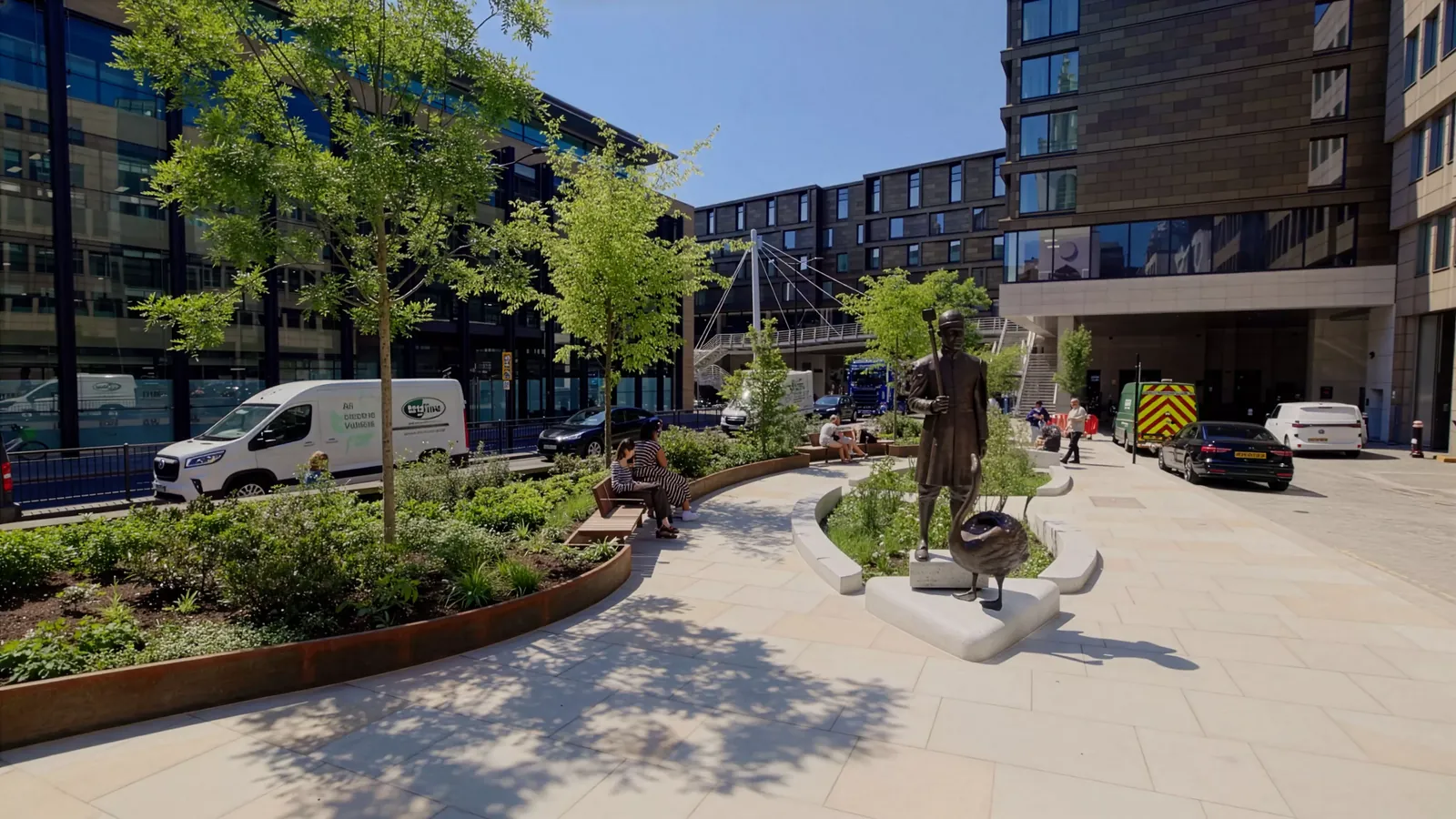
Little Trinity Lane is a narrow historic street just south of St Paul’s Cathedral, overlooked by the Grade I listed St James Garlickhythe. Its steep topography sends surface water running fast along the carriageway into the combined sewer. Our team supported the drainage and public realm strategy that intercepts that water at source, removing more than 120,000 litres annually. Delivered as part of the City of London’s Climate Action Strategy Cool Streets and Greening initiative.
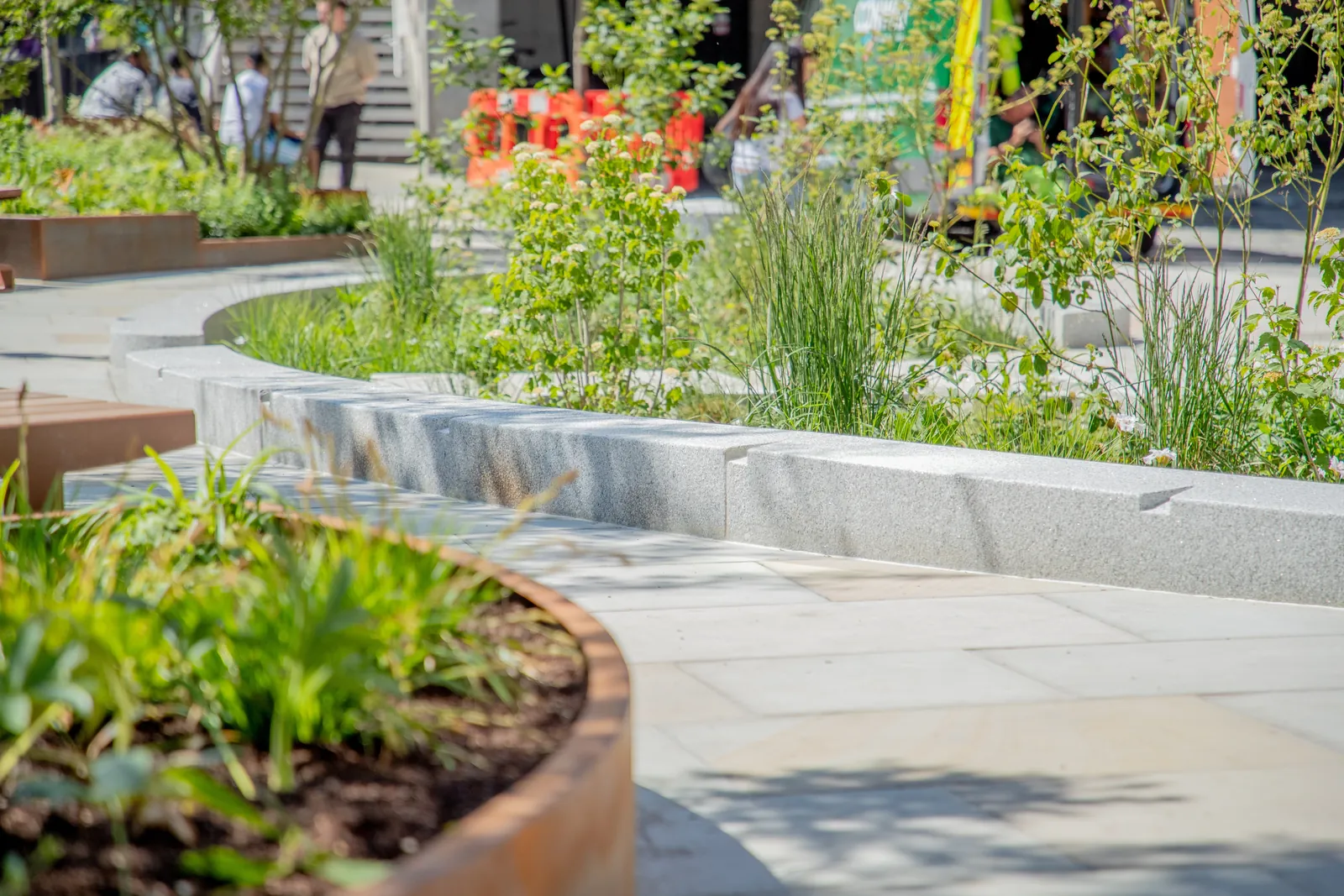
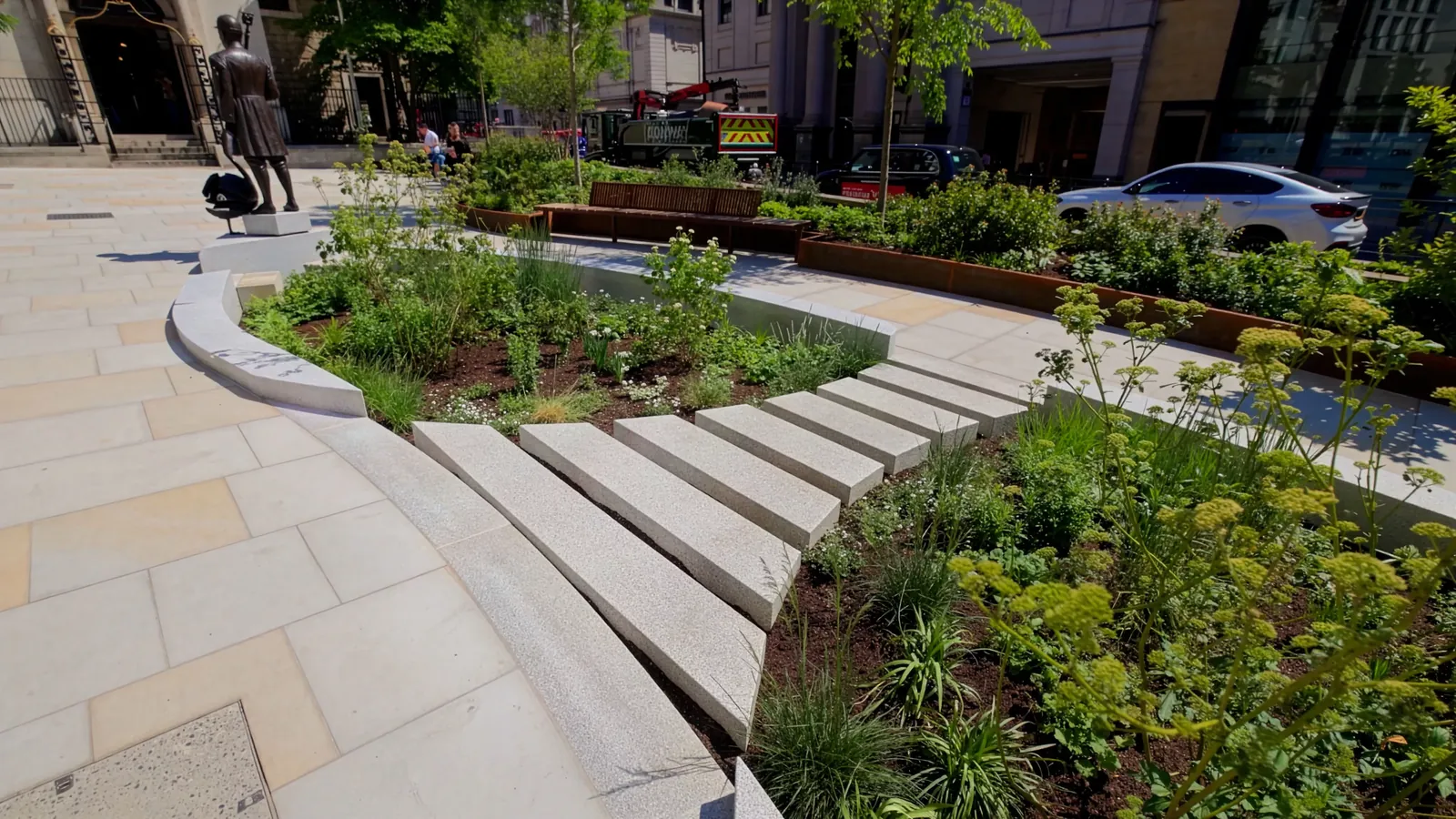
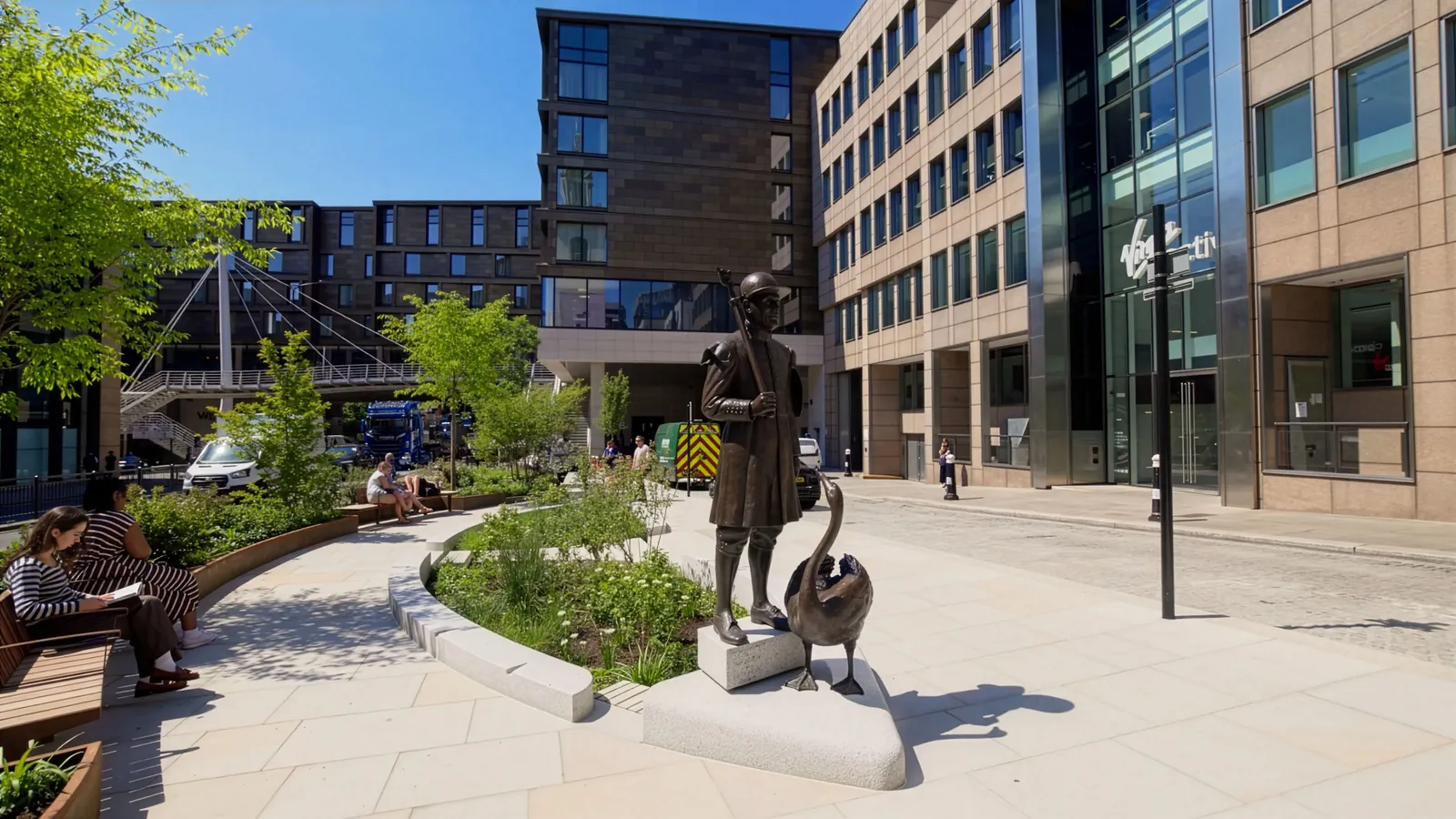
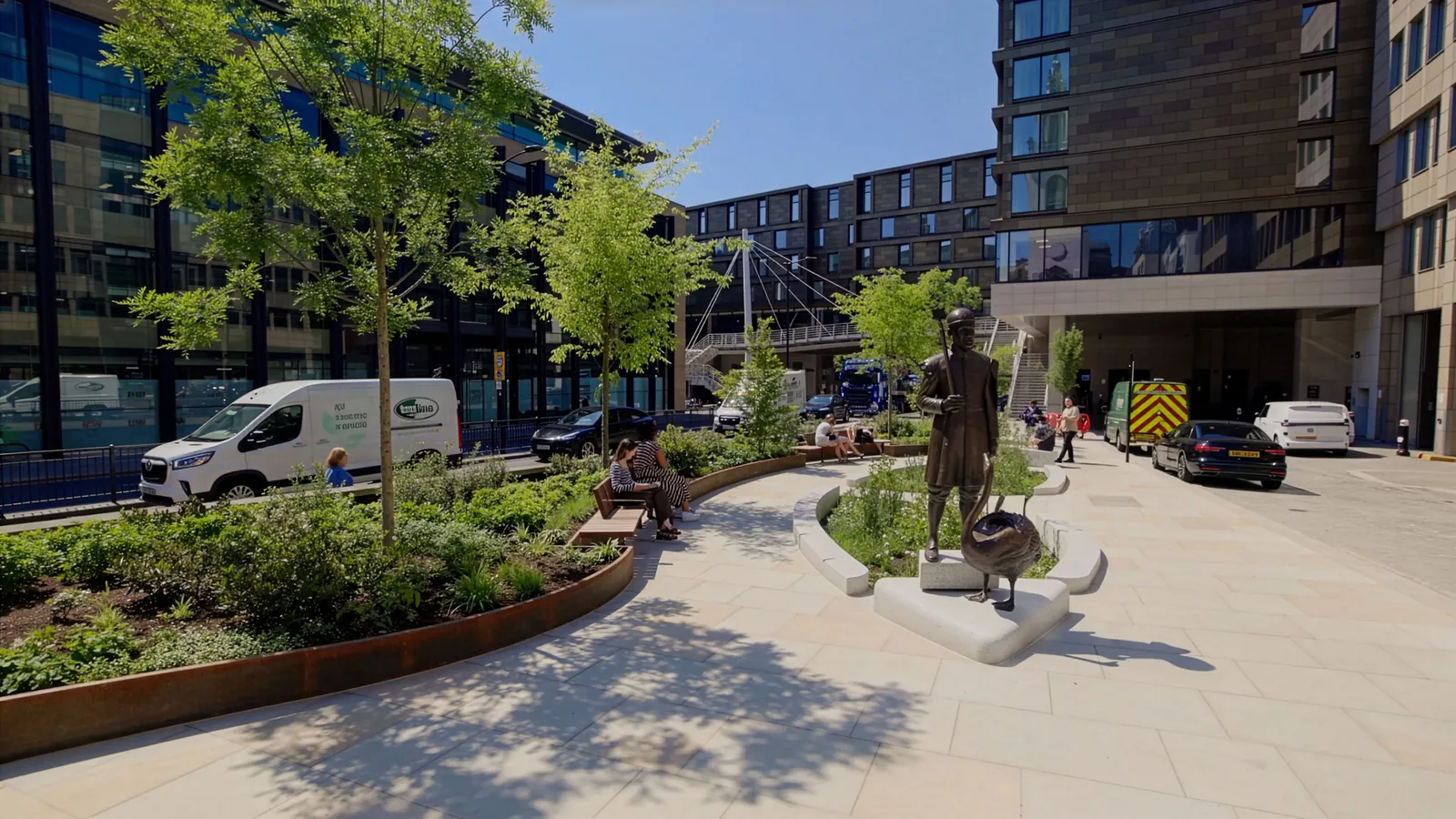
The site’s gradient is the controlling constraint. Fast-moving runoff needed slowing and retaining before it reached the combined sewer network. The response was a central rain garden running the length of the lane, with enlarged planting beds on each side. Together they slow runoff, promote infiltration, and manage surface water as a landscape asset. The result is more than 120,000 litres removed from the combined sewer annually, with the catchment disconnected entirely. No buried tanks, no engineered attenuation chambers. The drainage is the landscape.
The nature-based drainage approach also resolves the misconnection between drainage infrastructure and the heritage setting. Any intervention in one of the oldest parts of the City has to earn its place. Rain gardens and enlarged planting beds do: they are legible, ecologically productive, and consistent with the character of the street.
Climate resilience and co-benefits
Climate resilience was embedded beyond drainage alone. A carefully selected, climate-adapted planting palette removes the need for seasonal irrigation, while new trees and improved soil conditions enhance biodiversity and long-term environmental performance. The vegetation improves air quality and buffers the immediate environment from the surrounding urban streetscape, a meaningful gain on a lane that sits between two of the busiest roads in the Square Mile.
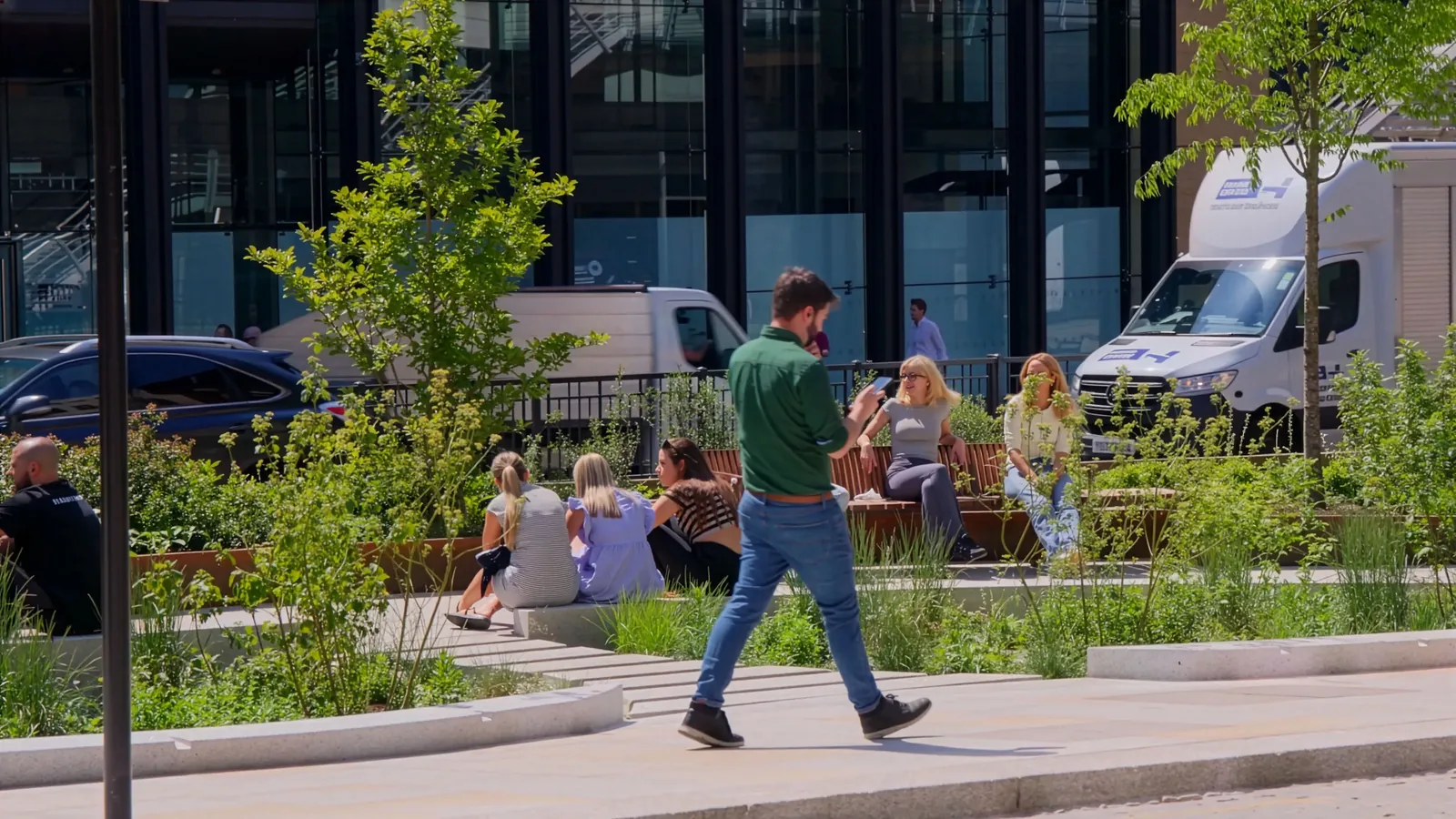
Stepping stones through the rain garden invite people to move through the planted area and engage with it directly. The scheme is future-proofed with the infrastructure installed now to expand the rain garden in future if funding becomes available.
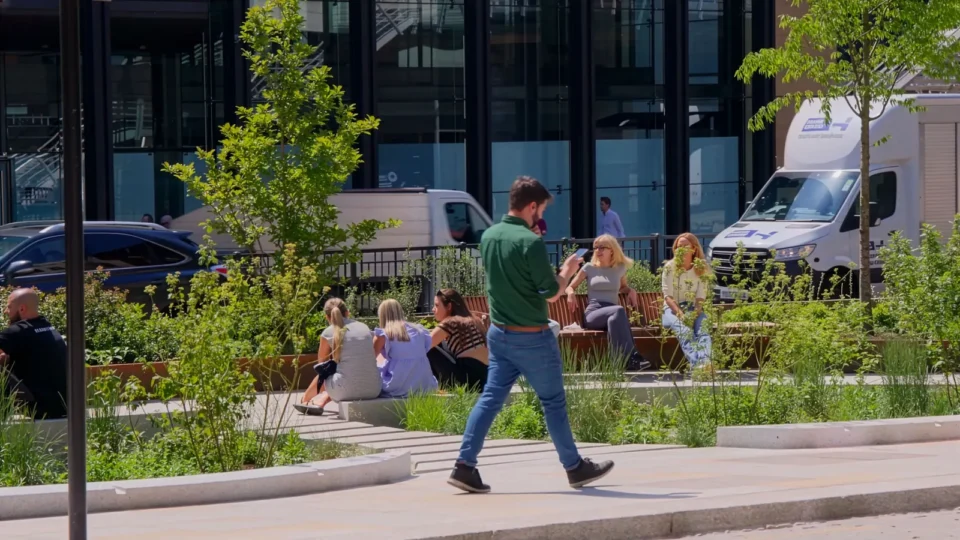
Little Trinity Lane demonstrates how policy-led drainage engineering can elevate even the most compact historic street into a resilient, people-centred space. The drainage is not hidden. It is the design.